

Can Dogs Eat Vanilla Ice Cream? What You Need to Know
Affiliate links — we may earn a commission
Picture this: a warm summer evening, and you’re enjoying a bowl of creamy vanilla ice cream. Your furry friend sits nearby, eyes wide with curiosity. It’s tempting to share a spoonful, but is it safe? Many pet owners wonder about the risks of giving their pets this popular treat.
While vanilla ice cream may seem harmless, it’s not always the best choice for your pet. Experts like Dr. Jerry Klein and Dr. Meisler highlight potential dangers. Lactose intolerance is common among pets, and dairy products can lead to digestive issues. Ingredients like sugar and artificial sweeteners, such as xylitol, pose additional risks.
This article explores the hidden dangers of vanilla ice cream for pets. It also provides safer alternatives to keep your pet happy and healthy. Understanding these risks ensures you make informed decisions about your pet’s diet.
Key Takeaways
- Vanilla ice cream may cause digestive issues due to lactose intolerance.
- Harmful ingredients like xylitol and sugar can be toxic to pets.
- High-fat content increases the risk of pancreatitis.
- Consult a veterinarian before introducing new treats.
- Opt for pet-safe alternatives to avoid health complications.
Can Dogs Eat Vanilla Ice Cream? Uncovering the Facts
When it comes to indulging your pet, not all treats are created equal. While sharing a spoonful of ice cream might seem harmless, the ingredients in this popular dessert can pose serious risks to your furry friend. Understanding what’s in your pet’s treat is the first step toward ensuring their safety.
Overview of Ice Cream Ingredients and Risks
Most ice cream contains dairy, sugar, and artificial additives. These ingredients can be problematic for pets. Dairy, for instance, is a common culprit behind digestive issues. Many pets are lactose intolerant, meaning they lack the enzyme needed to break down lactose. This can lead to symptoms like diarrhea, gas, and bloating.
Sugar is another concern. High sugar intake can contribute to obesity, dental problems, and even diabetes in pets. Artificial sweeteners, such as xylitol, are particularly dangerous. Xylitol is highly toxic and can cause life-threatening conditions like hypoglycemia.
Lactose Intolerance and Food Allergies in Dogs
Lactose intolerance is widespread among pets. According to Dr. Jerry Klein, “After weaning, pets produce less lactase, the enzyme needed to digest dairy.” This makes it difficult for them to process cream-based products like ice cream.
Food allergies are another issue. Common allergens in ice cream include dairy, nuts, and artificial flavors. These can trigger reactions like red, itchy skin, vomiting, or diarrhea. Even flavors like vanilla, when prepared with dairy, can cause discomfort.
“The risks associated with dairy-rich food can lead to significant health issues,” warns Dr. Klein.
While the idea of sharing a treat with your pet is appealing, it’s essential to prioritize their health. The next section will explore deeper health risks and allergic reactions in detail.
Health Risks and Hidden Dangers of Ice Cream on Dogs
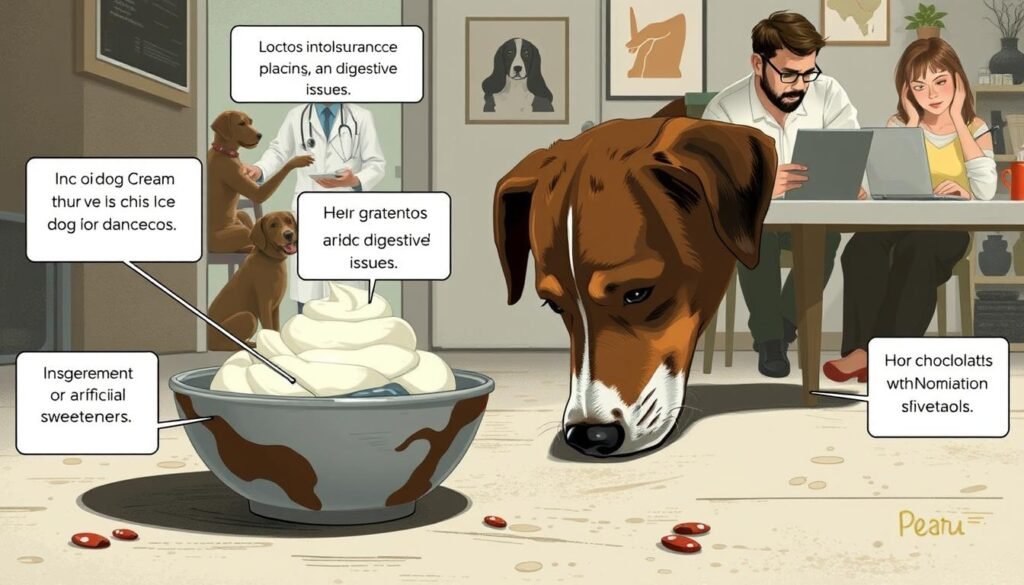
Many pet owners don’t realize the hidden dangers lurking in a simple treat. While sharing a spoonful of ice cream with your furry friend might seem harmless, it can lead to serious health issues. Understanding these risks is crucial to keeping your pet safe.
Digestive Issues and Pancreatitis
One of the most common problems pets face after consuming ice cream is digestive distress. Many pets are lactose intolerant, meaning they struggle to process dairy. This can result in symptoms like diarrhea, gas, and an upset stomach.
High-fat foods like cream-based treats can also trigger pancreatitis. This condition causes inflammation of the pancreas and can be life-threatening. Symptoms include vomiting, abdominal pain, and lethargy.
Toxic Ingredients and Their Effects
Certain ingredients in ice cream are highly toxic to pets. Chocolate, for example, contains theobromine, which pets cannot metabolize. Even small amounts can lead to seizures, heart issues, or collapse.
Artificial sweeteners like xylitol are equally dangerous. Found in some sugar-free ice cream, xylitol can cause a sudden drop in blood sugar, leading to weakness, tremors, and even liver failure.
“The risks associated with dairy-rich food can lead to significant health issues,” warns Dr. Jerry Klein.
Regular consumption of ice cream can also contribute to long-term problems like obesity and chronic gastrointestinal issues. Always prioritize your pet’s well-being by choosing safer alternatives.
Safe Treat Alternatives for Your Dog

Finding safe and enjoyable treats for your pet doesn’t have to be a challenge. While traditional ice cream may pose risks, there are plenty of healthier options to keep your furry friend happy. These alternatives avoid harmful ingredients like high sugar and dairy, ensuring your pet stays healthy.
Homemade Frozen Yogurt and Nice Cream Recipes
Making your own pet-friendly frozen treats is simple and rewarding. Plain, fat-free yogurt is a great base for homemade frozen yogurt. It’s lower in lactose, making it easier for your pet to digest. Blend it with pet-safe fruits like bananas or blueberries for added flavor.
Another option is “nice cream,” made from ripe bananas. Blend two bananas until smooth, then freeze the mixture. This food is rich in potassium and fiber, offering a nutritious alternative to traditional cream-based desserts.
Here’s a quick recipe to try:
- Blend 2 ripe bananas until smooth.
- Add a tablespoon of peanut butter (ensure it’s xylitol-free).
- Freeze in small portions for a refreshing treat.
Commercial Dog-Friendly Ice Cream Options
If you prefer store-bought options, several brands offer ice cream specifically formulated for pets. Ben & Jerry’s Doggie Desserts, for example, are dairy-free and made with sunflower seed butter. They come in flavors like pumpkin and peanut butter, ensuring your pet enjoys a safe and tasty snack.
Other brands, like Frosty Paws, provide frozen treats with added vitamins and minerals. These products are designed to be low in sugar and easy to digest, making them a convenient choice for pet owners.
| Brand | Key Ingredients | Benefits |
|---|---|---|
| Ben & Jerry’s Doggie Desserts | Sunflower seed butter, pumpkin | Dairy-free, xylitol-free |
| Frosty Paws | Yogurt, vitamins, minerals | Low sugar, easy to digest |
| Nice Cream (Homemade) | Bananas, peanut butter | High in potassium, fiber |
Remember, moderation is key. Even safe alternatives should be given in small amounts to avoid digestive issues. For more tips on safe dog-friendly alternatives, consult your veterinarian.
Conclusion
Sharing a sweet treat with your furry companion may seem harmless, but it’s crucial to understand the risks. Traditional ice cream often contains ingredients like dairy, sugar, and artificial sweeteners, which can lead to digestive issues, pancreatitis, or even toxicity. Many pets struggle with lactose intolerance, making dairy-based products a poor choice for their health.
Instead of risking discomfort or serious conditions, consider safer alternatives. Homemade frozen yogurt or fruit-based treats are excellent options. Brands like Ben & Jerry’s Doggie Desserts and Frosty Paws also offer pet-friendly treats that avoid harmful ingredients.
Always consult your veterinarian before introducing new food into your pet’s diet. By making informed choices, you can ensure your furry friend stays happy and healthy while enjoying occasional indulgences.
Is vanilla ice cream safe for dogs?
What are the risks of feeding ice cream to dogs?
Can lactose intolerance affect dogs?
Are there dog-friendly alternatives to ice cream?
How much vanilla ice cream can a dog have?
What ingredients in ice cream are toxic to dogs?

Sarah Jennings
Contributing writer covering My Favorite Dog - Dog tips, Tricks and Best of Product Roundups.