

Can Dogs Have Almond Milk? Safety & Benefits Explained
Affiliate links — we may earn a commission
Plant-based milks, like almond milk, have gained popularity among health-conscious individuals. But what about our furry friends? Many pet owners wonder if almond milk is a safe and healthy option for their dogs.
While almond milk is not toxic to dogs, it’s essential to understand the risks and benefits. This guide explores whether almond milk can be a part of your dog’s diet and how to introduce it safely.
Dogs have unique dietary needs, and not all human foods suit them. Almond milk, when given in moderation, can be an occasional treat. However, it’s crucial to avoid products with added sugars or harmful additives like xylitol, which can be dangerous for dogs.
This article will dive into the nutritional profile of almond milk, compare it to other milk alternatives, and provide tips for safely incorporating it into your dog’s diet. Always consult your veterinarian before making any dietary changes for your pet.
Key Takeaways
- Almond milk is not toxic to dogs but should be given in moderation.
- Avoid almond milk with added sugars or artificial sweeteners like xylitol.
- Consult your veterinarian before introducing almond milk to your dog’s diet.
- Almond milk can be an occasional treat but should not replace regular meals.
- Monitor your dog for any adverse reactions after consumption.
Understanding Almond Milk’s Nutritional Profile
Almond milk has become a popular choice for those seeking dairy-free alternatives. Its light texture and subtle flavor make it a versatile option for many diets. But what does it offer nutritionally, and how does it compare to other milk options?
Nutritional Benefits for Dogs
Almond milk is rich in vitamins A and E, which support skin health and immune function. It’s also low in calories, making it a suitable treat for pets needing weight management. Unlike cow milk, it’s lactose-free, which can be beneficial for lactose-intolerant animals.
However, it’s important to note that almond milk lacks the protein content found in dairy or soy milk. This makes it more of a supplement than a meal replacement. Always ensure your pet’s primary diet meets their protein needs.
Comparison with Dairy and Other Plant-Based Milks
When comparing almond milk to cow milk, the differences are significant. Cow milk is higher in protein and calcium but contains lactose, which some pets cannot digest. Plant-based alternatives like soy milk and oat milk offer varying nutritional profiles:
- Soy milk: High in protein but may cause allergies in some pets.
- Oat milk: Rich in fiber but higher in calories.
Here’s a quick comparison of their nutritional values per cup:
| Milk Type | Calories | Protein (g) | Calcium (mg) |
|---|---|---|---|
| Almond Milk | 30 | 1 | 450 |
| Cow Milk | 150 | 8 | 300 |
| Soy Milk | 80 | 7 | 300 |
| Oat Milk | 120 | 3 | 350 |
“Plant-based milks offer unique benefits, but it’s essential to choose the right one for your pet’s dietary needs.”
While almond milk is a great alternative for lactose-intolerant pets, it’s best used as an occasional treat. Always opt for unsweetened versions to avoid harmful additives like xylitol. For pets with specific dietary needs, consult your veterinarian to ensure their nutritional requirements are met.
can dogs have almond milk: Safety Considerations and Dietary Guidelines
Introducing almond milk to a dog’s diet requires careful consideration of safety and moderation. While it’s not toxic, certain factors must be addressed to ensure it’s a safe treat. This section covers essential guidelines to follow.
Moderation and Serving Size Recommendations
When offering almond milk, moderation is key. A small amount is sufficient to avoid digestive issues. Start with a teaspoon and monitor for any adverse reactions. Overconsumption can lead to stomach upset or diarrhea.
It’s important to remember that almond milk should never replace regular meals. Use it as an occasional treat, ensuring it doesn’t exceed 10% of your pet’s daily caloric intake. Always consult your veterinarian for precise serving size recommendations.
Risks of Additives Such as Xylitol and Carrageenan
Not all almond milk products are safe. Some contain harmful additives like xylitol, a sweetener that can be life-threatening to pets. Even a small amount of xylitol can cause hypoglycemia, seizures, or liver damage.
Other additives, such as carrageenan, may cause digestive issues. Always check the ingredient list and opt for unsweetened, organic varieties. Avoid products with artificial sweeteners or excessive sugar, as they can lead to health problems.
“Choosing the right almond milk product is crucial for your pet’s safety. Always prioritize unsweetened options and consult your vet.”
By following these guidelines, you can safely introduce almond milk as a treat. For more tips on selecting the best products, visit our guide on unsweetened almond milk.
Exploring Alternative Milk Options for Your Dog
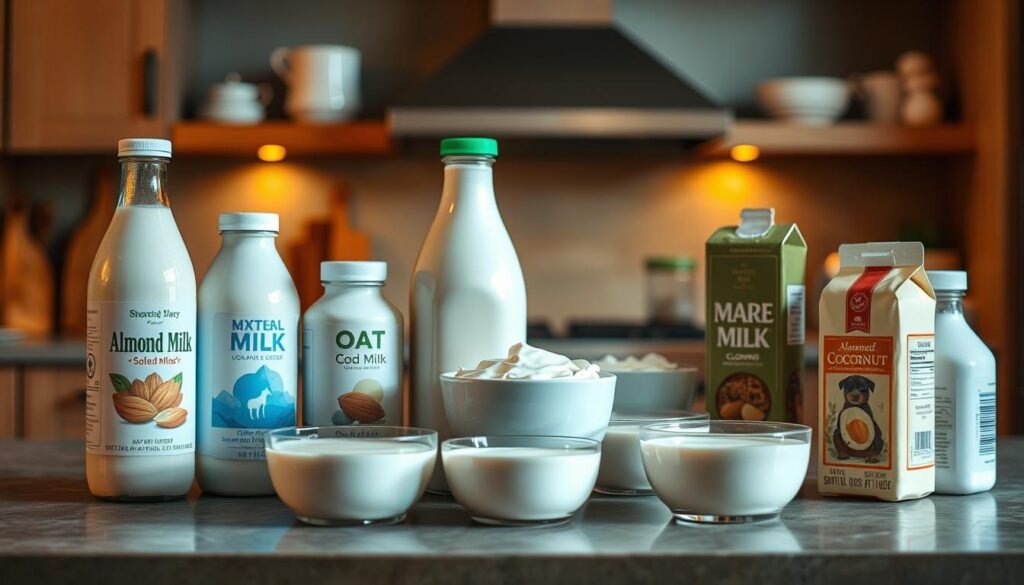
Exploring plant-based milk alternatives can offer variety and potential benefits for your pet’s diet. Oat milk, coconut milk, and soy milk are popular choices, each with unique nutritional profiles. Understanding their benefits and risks ensures you make informed decisions for your pet’s health.
Oat Milk, Coconut Milk, and Soy Milk Benefits
Oat milk is rich in fiber, which supports digestion. It’s also low in fat, making it a good option for pets needing weight management. Coconut milk contains lauric acid, known for its antimicrobial properties. However, it’s higher in calories, so moderation is key.
Soy milk provides a protein boost, but some pets may have allergies. Always monitor for reactions when introducing new foods. These alternatives can complement a balanced diet when chosen carefully.
Choosing Unsweetened and Organic Products
When selecting a milk alternative, prioritize unsweetened and organic options. Added sugars and artificial sweeteners like xylitol can be harmful. Reading labels ensures the product is free from harmful additives.
Organic products often use cleaner ingredients and purer water sources. This minimizes risks and provides a safer option for your pet. For more tips on selecting the best products, visit our guide on unsweetened almond milk.
“Plant-based milks can be a healthy addition to your pet’s diet when chosen wisely. Always opt for unsweetened and organic varieties.”
By understanding the benefits and risks of these alternatives, you can make informed choices. Moderation and careful selection ensure your pet enjoys these treats safely.
Integrating Almond Milk into Your Dog’s Diet Safely

Adding almond milk to your pet’s routine can be a thoughtful treat, but it requires careful planning. Start with small amounts to ensure it fits well into their dog diet. Gradual introduction helps avoid digestive issues and allows you to monitor their reaction.
How to Introduce New Foods Gradually
Begin with a teaspoon of almond milk mixed into their regular food. Observe for any signs of discomfort, such as vomiting or diarrhea. If no issues arise, you can slowly increase the amount almond milk over time.
Always choose a high-quality product free from harmful additives. Reading labels ensures you avoid ingredients like xylitol, which can be toxic. Consulting your veterinarian before making dietary changes is essential for your pet’s health.
DIY Recipes and Homemade Almond Milk Treats
Making almond milk at home is a great way to control ingredients. Soak 1 cup of organic almonds for 12 hours, then blend with 4 cups of water. Strain the mixture to create a smooth, unsweetened treat.
Here’s a simple recipe to try:
- Blend soaked almonds with water until smooth.
- Strain using a cheesecloth or nut milk bag.
- Store in the refrigerator for up to three days.
This homemade option ensures your pet gets a safe and natural treat. Mix it into their meals or use it as a base for frozen snacks.
“Homemade almond milk is a healthier alternative, allowing you to avoid harmful additives and control the ingredients.”
By following these steps, you can safely integrate almond milk into your pet’s routine. Remember, it’s a supplement, not a staple. Always prioritize their primary dog diet and consult your veterinarian for personalized advice.
Benefits and Drawbacks of Almonds in Dog Treats
Almonds offer a mix of nutrients that can benefit pets when used thoughtfully. They are rich in vitamins and minerals, making them a valuable addition to treats. However, their calorie content and potential digestive risks require careful consideration.
Vitamin, Mineral, and Fiber Advantages
Almonds are a great source of vitamin E, which supports skin and coat health. They also contain magnesium, essential for bone strength, and fiber, aiding digestion. These nutrients make almonds a nutritious option compared to cow milk-based treats.
Antioxidants in almonds help combat free radicals, promoting overall wellness. Prebiotics in their fiber content support gut health, making them a functional ingredient in pet snacks. Always ensure almonds are finely ground or used in butter form to avoid choking hazards.
Caloric Impact and Managing Weight Gain
While almonds are nutrient-dense, they are also high in calories. Overuse can lead to weight gain, especially in less active pets. A single ounce of almonds contains about 160 calories, so moderation is key.
To balance nutrition and calorie intake, limit almond-based treats to small portions. Incorporate them as part of a varied diet, ensuring they don’t exceed 10% of daily caloric needs. Monitoring your pet’s weight and activity level helps maintain a healthy balance.
“Almonds can enhance treats with their nutritional benefits, but their calorie content demands careful portion control.”
By understanding both the advantages and drawbacks, pet owners can make informed decisions. Almonds, when used thoughtfully, can be a healthy part of a balanced treat regimen.
Conclusion
When considering treats for pets, understanding the safety and nutritional value of plant-based options is essential. Almond milk can be a safe choice when given in moderation and free from harmful additives like xylitol. Always read labels to ensure the product is unsweetened and free from artificial sweeteners.
While it offers some benefits, such as being lactose-free and low in calories, it should never replace a balanced dog diet. Instead, use it as an occasional treat. Alternatives like oat milk or soy milk can also be considered, provided they are unsweetened and organic.
Before introducing any new food, consult your veterinarian to ensure it aligns with your pet’s specific needs. With careful selection and informed choices, plant-based options can complement your pet’s diet while minimizing risks.
Is almond milk safe for dogs to consume?
What are the nutritional benefits of almond milk for dogs?
How does almond milk compare to cow’s milk or other plant-based options?
Are there risks associated with giving almond milk to dogs?
What are some alternative milk options for dogs?
How should I introduce almond milk into my dog’s diet?
Can almond milk contribute to weight gain in dogs?
Are almonds themselves safe for dogs?

Sarah Jennings
Contributing writer covering My Favorite Dog - Dog tips, Tricks and Best of Product Roundups.






Interesting read! Just curious, wouldnt the high sugar content in almond milk be harmful for dogs in the long run?
Interesting read! But, shouldnt we be more concerned about potential allergies or digestive issues in dogs due to almond milk?
Interesting read! But wont the high sugar content in almond milk be harmful to dogs in the long run?