
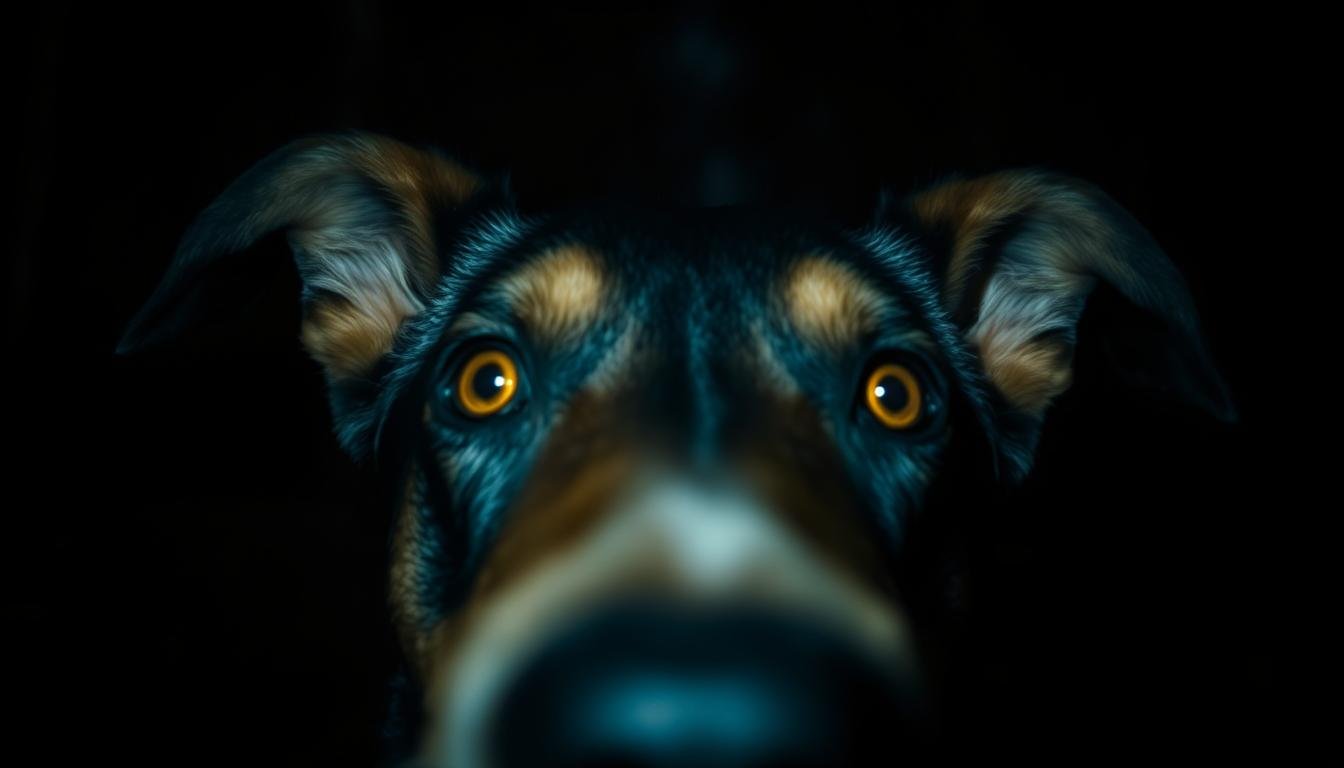
Can Dogs See in the Dark? Surprising Insights for Pet Owners
Affiliate links — we may earn a commission
This Can Dogs See in showed up at my door on a Friday and by Sunday I was already recommending it to everyone. Let me explain.
Have you ever wondered how your furry friend navigates the house at night? Many pet owners are curious about their dog’s ability to move around in low-light conditions — and trust me, I’ve tried a lot of these. While it’s a common belief that dogs have superior night vision, the truth is both fascinating and scientifically grounded.
Dogs are not entirely dependent on complete darkness to see. Their eyes are equipped with unique features that give them an edge in dim light. For instance, their pupils are larger than humans’, allowing more light to enter. Additionally, their retinas are packed with rod cells, which are highly sensitive to motion and faint light.
Another key component is the tapetum lucidum, a reflective layer behind the retina. This structure bounces light back through the retina, enhancing their ability to detect objects in low-light environments. While this gives them an advantage over humans, it’s important to note that dogs still need some light to see clearly.
Understanding these anatomical differences helps debunk myths and provides a clearer picture of how dogs perceive their surroundings at night. For more detailed insights, explore this comprehensive guide on canine vision.
Key Takeaways
- Dogs have larger pupils, allowing more light to enter their eyes in dim conditions.
- The tapetum lucidum enhances their ability to see in low light by reflecting light back through the retina.
- Dogs rely on rod cells in their retinas for motion detection and sensitivity to faint light.
- Complete darkness limits their vision, as they still require some light to see.
- Their night vision is superior to humans but not as effective as in daylight.
Understanding Canine Night Vision
Ever noticed how your pet moves effortlessly in dim light? Their ability to navigate in low-light conditions is rooted in the unique structure of their eyes. Unlike humans, dogs have evolved with features that enhance their vision in the dark, making them more adept at spotting movement and objects when light is scarce.
Anatomy of the Canine Eye
The dog eye is a marvel of evolution. It includes several key components: the cornea, iris, pupil, lens, and retina. The cornea and lens work together to focus light onto the retina, which contains photoreceptors responsible for processing visual information. Dogs have larger pupils than humans, allowing more light to enter their eyes, which is crucial for seeing in dim environments.
Photoreceptors: Rods versus Cones
The retina contains two types of photoreceptors: rods and cones. Rods are highly sensitive to low light and motion, while cones are responsible for color vision and detail. Dogs have a higher concentration of rods compared to humans, which gives them an edge in detecting movement and shapes in the dark. However, they have fewer cones, which explains their limited ability to distinguish colors.
The Role of Tapetum Lucidum
One of the most fascinating features of the dog eye is the tapetum lucidum. This reflective layer sits behind the retina and bounces light back through the photoreceptors, maximizing the use of available light. This is why dogs’ eyes often glow in the dark. The tapetum lucidum significantly enhances their ability to see in low-light conditions, giving them a clear advantage over humans.
For a deeper dive into how dogs navigate in the dark, check out this comprehensive guide on canine vision.
can dogs see in the dark: Unpacking the Myths and Facts
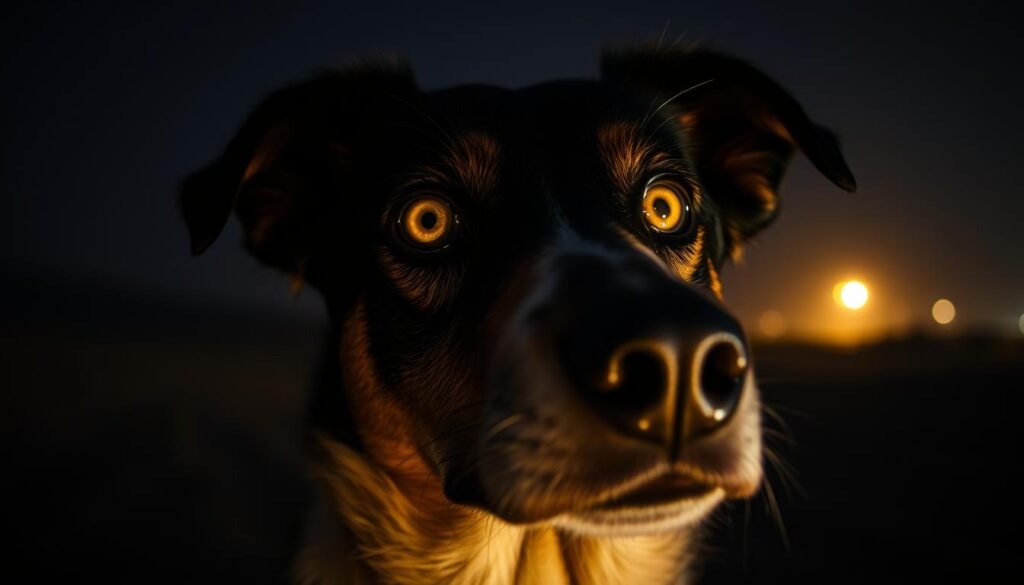
Many believe pets have superhuman abilities in low-light settings, but the reality is more nuanced. While furry companions excel in dim environments, their vision isn’t as supernatural as some think. Let’s separate myths from facts to understand how they truly perceive the world at night.
Light Sensitivity and Motion Detection
Pets have evolved with features that enhance their ability to navigate in low light. Their eyes contain a higher concentration of rod cells, which are highly sensitive to faint light and motion. This allows them to detect movement from a distance, even in dim conditions.
Additionally, the tapetum lucidum, a reflective layer behind the retina, bounces light back through the photoreceptors. This maximizes the use of available light, giving them an edge over humans in low-light environments. However, this doesn’t mean they can see in total darkness.
Limitations in Complete Darkness
Contrary to popular belief, pets still need some light to see. In absolute darkness, both humans and furry companions struggle. The retina relies on light to activate the rod cells, meaning even minimal ambient light, like moonlight or streetlights, is essential for their vision.
Studies show that while pets can detect motion better than humans in low light, their ability to see stationary objects is limited. For example, police dog research highlights their superior motion detection but also their reliance on light sources.
In summary, while pets have impressive night vision capabilities, they aren’t equipped to see in complete darkness. Their enhanced light sensitivity and motion detection are remarkable, but they still depend on ambient light to navigate effectively.
Comparing Dog Vision to Humans and Other Animals
When it comes to navigating low-light environments, dogs and humans have vastly different capabilities. While humans struggle in dim conditions, dogs have evolved with features that give them a significant advantage. However, when compared to cats, dogs fall short in complete darkness. Let’s explore these differences in detail.
Human vs. Canine Night Vision
Humans rely heavily on cone cells in the retina for color and detail, which are less effective in low light. In contrast, dogs have a higher concentration of rod cells, making them more sensitive to motion and faint light. Their larger pupils allow more light to enter, enhancing their ability to see in dim environments.
Another key difference is the tapetum lucidum, a reflective layer behind the retina. This structure bounces light back through the photoreceptors, giving dogs an edge over humans in low-light conditions. However, dogs still need some light to see clearly, as their vision is not designed for complete darkness.
How Cat Vision Outperforms Dog Vision
Cats take night vision to another level. Their vertical-slit pupils can open wider than those of dogs, allowing even more light to enter. Additionally, their tapetum lucidum is more efficient, reflecting light with greater intensity. This makes cats six times better at seeing in low light compared to humans.
Studies show that cats can detect movement in near-total darkness, a feat dogs cannot match. Their superior night vision is a result of evolutionary adaptations, making them exceptional nocturnal hunters. While dogs excel in dim light, cats remain the champions of nocturnal visual acuity.
Understanding these differences helps pet owners appreciate the unique abilities of their furry companions. Whether it’s a dog’s motion detection or a cat’s superior night vision, each species has evolved to thrive in its environment.
Conclusion
Understanding how pets perceive their surroundings at night reveals fascinating insights into their natural abilities. Their tapetum lucidum and rod-dominant retina enhance sensitivity to faint light, giving them an edge over humans in dim environments. However, they still require some light to navigate effectively.
While pets excel in low-light conditions, complete darkness limits their vision. Their larger pupils and reflective eye layer maximize available light, but they rely on ambient sources like moonlight. Compared to cats, pets have superior motion detection but fall short in near-total darkness.
By appreciating these anatomical features, pet owners can better understand their companions’ capabilities. This knowledge helps ensure proper care during nighttime activities. Observing these natural designs fosters a deeper connection with our furry friends.
How does a dog’s eye structure help with night vision?
What is the tapetum lucidum, and how does it work?
Can dogs see in complete darkness?
How does dog night vision compare to human vision?
Are cats better at seeing in the dark than dogs?
Do dogs rely on other senses in the dark?
How does a dog’s pupil adapt to dim light?

Sarah Jennings
Contributing writer covering My Favorite Dog - Dog tips, Tricks and Best of Product Roundups.